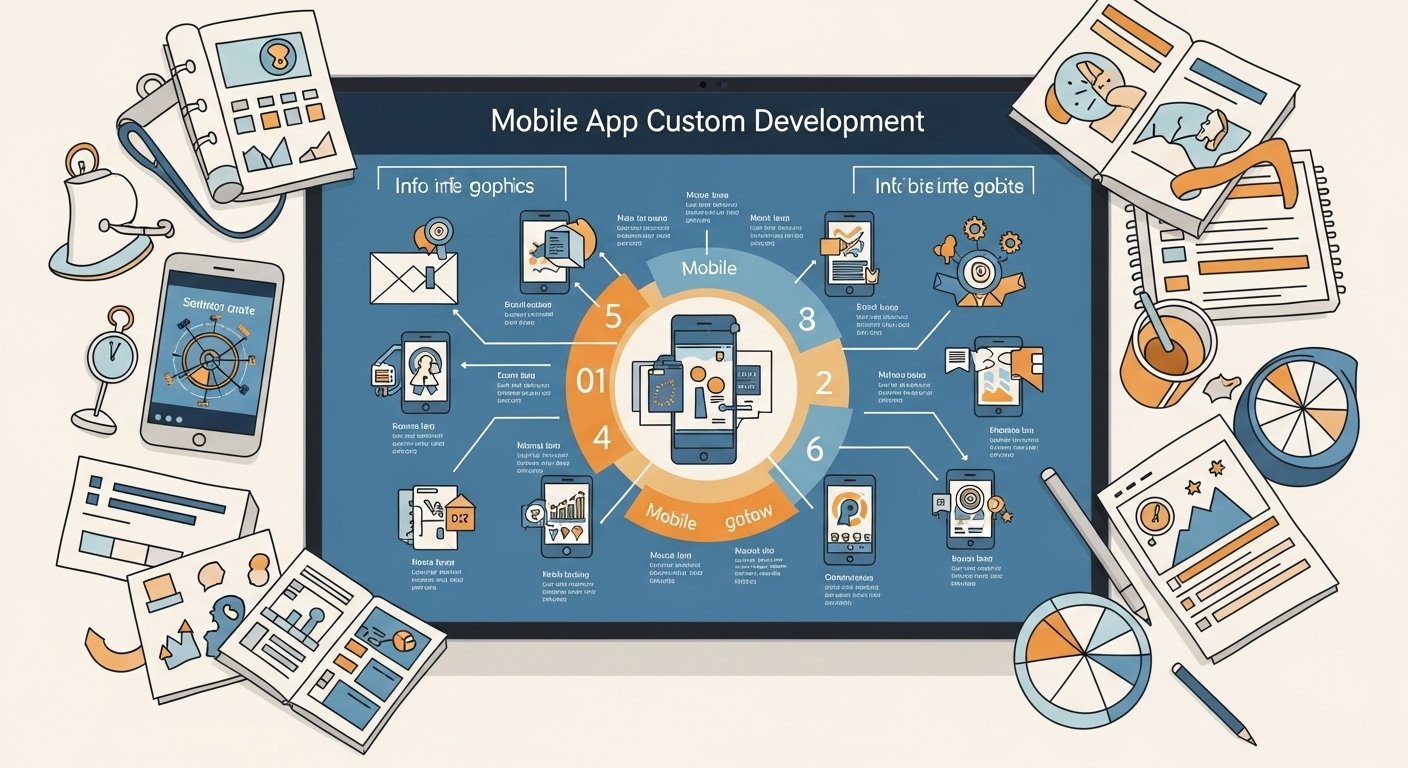
People use their phones all the time for shopping, talking with friends, and getting help with daily tasks. Because of this, many businesses want their own special apps. Mobile app custom development lets you build an app that fits your needs exactly. It is not like apps you download from a store that everyone uses the same way. Instead, custom work makes something unique just for you. This guide explains everything in simple words. You will learn the full process, how much it costs, what features help most, and how to pick good help. In 2026, phones are even smarter with new tools like fast internet and smart helpers. That is why custom apps can make your business grow better than before. Reading this will give you clear steps to start smart and avoid problems later.
What Is Mobile App Custom Development?
Mobile app custom development means making an app from the beginning just for one business or idea. You tell the team what you want the app to do. Then they build it step by step. For example, a small shop owner might want an app that lets customers order food and pay right away. A ready-made app cannot do that perfectly, but a custom one can. This way, the app feels like it belongs to your brand. Another thing is that it can connect to your own tools, such as your store system or customer list. Over time, this makes your work easier and your customers happier. That is why so many people choose custom development instead of simple copies.
Custom apps also grow with your business. At first, you might need basic buttons and lists. Later, you can add more parts without starting over. This means you save time and money in the long run. In simple terms, it is like ordering a suit that fits your body instead of buying one from the rack that almost fits. You get exactly what you need, and it works better every day.
Why Choose Custom Mobile App Development?
Many businesses pick custom apps because they stand out from the crowd. Ready-made apps look the same to everyone. With custom work, your app can show your colors, your logo, and your special way of helping customers. This builds trust because people feel like you care about them. In addition, custom apps can solve your exact problems. For example, a doctor’s office might need an app that books visits and sends reminders safely. A store-bought app might not keep patient information private enough.
Another reason is control. You own the code and can change things anytime. This means you do not depend on another company that might change their rules. Over time, your app can add new ideas as your business grows. In 2026, phones connect to watches, cars, and smart homes. A custom app can use all that to give better service. That is why it helps small shops compete with big stores. You get an edge that feels personal and fresh.
The Step-by-Step Process of Building a Custom Mobile App
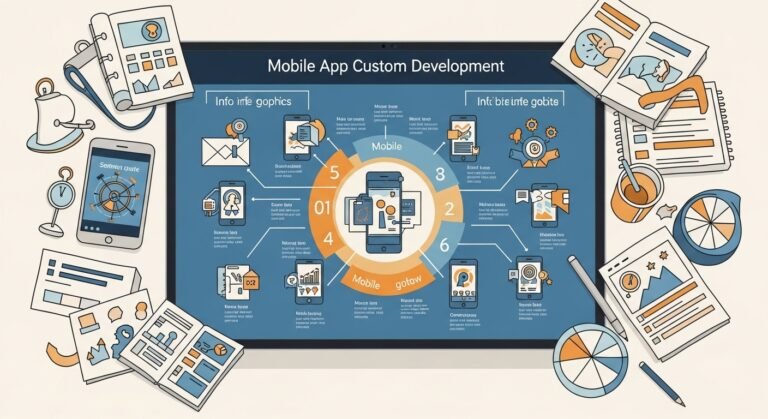
Building a custom mobile app takes several clear steps. Each one builds on the last, so nothing gets missed. First comes the planning part. You sit with the team and talk about your idea. What should the app do? Who will use it? This step is like making a map before a trip. It stops you from getting lost later. For example, a gym owner might say the app needs to track workouts and show progress pictures. The team writes everything down so everyone agrees.
Next comes the design stage. Here, the team draws pictures of every screen. They make sure buttons are big and easy to tap. Colors and words feel friendly. This is important because people will not use an app that looks hard or ugly. After that, you test the drawings with real people. They give feedback, and you fix things. This means the final app feels natural, like using your favorite phone tool.
Then the team starts the actual building. They write the code that makes everything work. One person might handle the part that shows pictures, while another makes the buttons send messages. Because phones come in two main types, they often build for both at the same time with smart tools. This step takes the most time, but it brings your idea to life.
After building, testing begins. The team checks every button and every screen many times. They look for mistakes, like slow loading or broken links. Real users try it too. This catches problems early. For example, they make sure the app works even when the internet is weak. Good testing means fewer angry customers later.
Next, the app goes live. The team puts it in the big stores where people download apps. They set up everything so it works on real phones. After launch, you celebrate, but the work is not over. Maintenance comes last. The team fixes small bugs and adds new features over time. In 2026, phones get updates often, so your app needs to stay fresh too. This whole process usually takes a few months, but it feels smooth when each step flows into the next.
Important Features for a Successful Custom Mobile App
Good custom apps share certain helpful features that keep users coming back. One big one is easy design that feels fun to use. Buttons are simple, and words are clear. People do not want to think hard when they open an app. Another thing is fast speed. No one likes waiting for pages to load. Because phones have fast internet now, your app should load in seconds.
Security is also key. Users share personal details like addresses or payments. The app must keep that information safe with strong locks. For example, a banking app uses extra steps to check who is logging in. In addition, push messages help a lot. These are little notes that pop up to remind users about sales or new updates. They feel personal and bring people back.
Offline mode is another smart feature. Sometimes there is no internet, but the app still works for basic tasks. A travel app might let you see maps even without signal. Personal touches make apps special too. The app can remember what users like and show them more of that. In 2026, smart helpers inside the app can answer questions with voice or suggest things based on past choices. These features work together to make your app feel alive and useful every day.
How Much Does Custom Mobile App Development Cost?
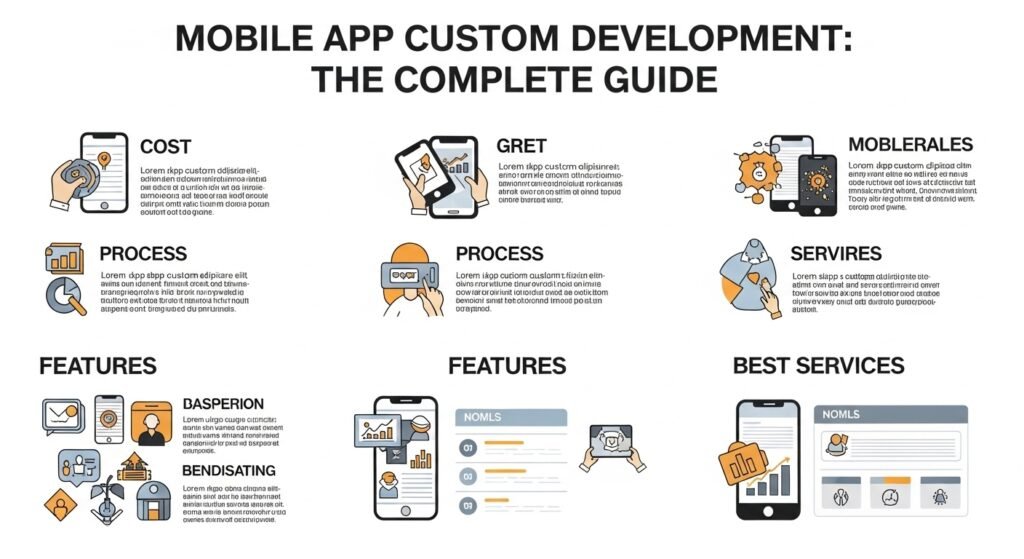
The cost of mobile app custom development changes based on what you want. A simple app with just a few screens might cost between fifteen thousand and eighty thousand dollars. This is like buying a nice used car. It includes basic buttons, lists, and simple connections. Most small businesses start here because it gets them going fast.
Bigger apps with more parts cost more. Think of apps that connect to stores, send payments, or use smart helpers. These usually fall between fifty thousand and one hundred fifty thousand dollars. Complex ones with video calls, maps that update live, or special tools can go up to four hundred thousand dollars or more. This feels like building a new room on your house. You pay for extra work, but you get something that lasts.
Remember, these are general ideas. The final price depends on many things, which we will talk about next. In 2026, new tools help keep costs lower than before, but good work still needs time and skill.
Factors That Change the Cost of Your App
Several things make the price go up or down. First, how many things the app does matters most. More screens and connections mean more work. Next, you decide if the app works on one type of phone or both main kinds. Building for both costs extra but reaches more people. Design level also changes the price. Fancy pictures and smooth movements take longer to make.
The team you pick plays a big role too. Some groups work from places where help costs less, while others charge more for fast service and years of practice. Adding new ideas like smart suggestions or voice talking raises the cost because they need special skills. After the app launches, you pay a little each year for updates. That is why planning ahead helps you stay inside your budget. By thinking about these factors early, you avoid surprise bills later.
How to Choose the Best Services for Custom Mobile App Development
Finding good help for your custom app is like picking a trusted friend for a big job. Look for teams that have done similar work before. Ask to see examples of their past apps. This shows they understand your type of business. Good services also talk clearly with you at every step. They listen to your ideas and explain things in plain words.
Another thing is their way of working. The best ones break the job into small parts and show you progress often. This means you can give feedback before everything is finished. They should also plan for help after the app is done. Phones change, and your needs grow, so ongoing support keeps everything running well. In addition, check how they handle safety and testing. Strong teams care about these details because happy users matter most. Take time to talk with a few groups. The right one will feel like a partner who wants your success as much as you do.
Common Mistakes to Avoid in Custom App Development
Even good projects can run into trouble if you skip important steps. One big mistake is jumping straight to building without enough planning. This leads to changes later that cost extra time and money. Another error is making the app too full of features at once. Start small so users do not feel lost. For example, add one helpful tool first and grow from there.
Poor testing is also a problem. If you rush this part, bugs appear after launch and upset customers. Ignoring safety can hurt trust too. Always make sure private information stays protected. In 2026, people care more about privacy than ever. Finally, forgetting about updates after launch means your app becomes old fast. Plan for maintenance from the beginning. Avoiding these mistakes keeps your project smooth and your budget happy.
Future Trends in Mobile App Custom Development for 2026
This year, custom apps are getting smarter in fun ways. Smart helpers inside the app learn what users like and give personal suggestions right away. Phones now handle some thinking on their own, so apps feel quicker. Voice talking is growing too. Users can just speak instead of typing. This helps older people and busy hands.
Fast internet lets apps show live updates, like traffic or store stock. Special glasses or screens can add fun layers, such as seeing extra details on your camera. Many apps now work across phones, tablets, and even watches without extra work. Privacy rules are stricter, so good teams build safety first. These trends mean your custom app can feel modern and exciting. By thinking about them now, you stay ahead and give users something they love.
Wrapping Up Your Custom Mobile App Journey
Mobile app custom development opens doors for any business that wants to connect better with people. We covered what it is, why it helps, the clear steps to build one, key features that matter, honest costs, and smart ways to pick help. You also learned mistakes to skip and new ideas for 2026 that make apps even better. Remember, good planning at the start leads to a strong app that grows with you. Take your time, ask questions, and focus on what your users really need. In the end, a well-made custom app can change how you do business and bring joy to the people who use it every day. Start with one small idea, and watch it grow into something special.
Disclaimer: This article is for informational purposes only. Actual costs, processes, and results can vary depending on your specific project and location. It does not provide professional advice. Please consult qualified developers or experts for personalized guidance on your mobile app custom development needs. Information is based on general industry knowledge as of 2026 and may change over time.
Explore More:
Mini Connected App Download Guide – How to Use, View VIN, R56 & Discontinued Updates
Microlearning App Review 2026: Best Free AI Microlearning App to Replace Doom Scrolling
About the Author