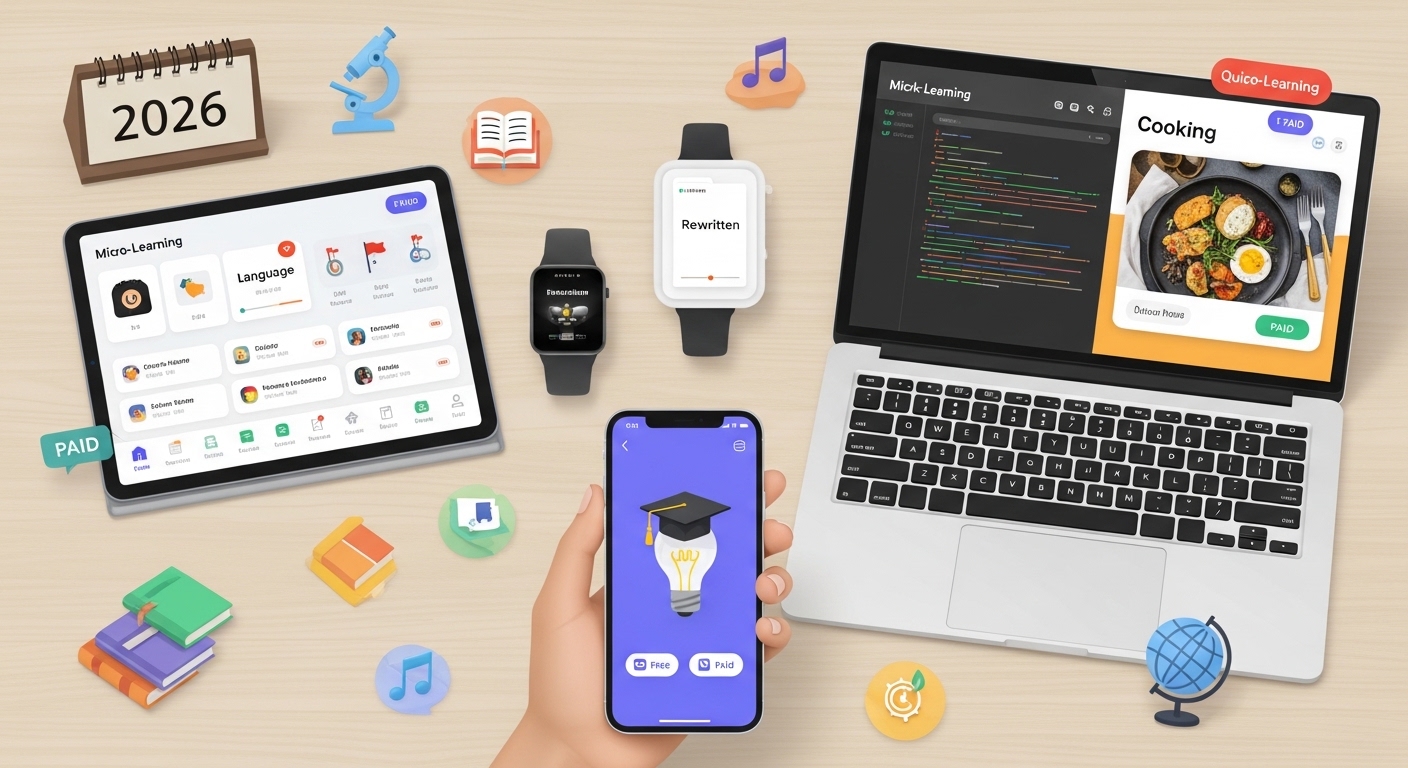
Do you ever feel like you want to learn new things but never have enough time? Life moves fast in 2026. People work, take care of family, and handle many tasks every day. That is why micro learning apps have become so popular. These apps let you learn in short bursts, often just five to fifteen minutes at a time. You can fit learning into your busy schedule without feeling stressed.
Micro learning means taking big topics and breaking them into small, easy pieces. Instead of sitting for hours in a class, you open your phone during a coffee break or while waiting for the bus. Over time, these small lessons add up to real knowledge. Many people use micro learning apps to pick up a new language, improve their job skills, or simply learn interesting facts. Because the lessons are short and fun, it is easier to stay motivated and remember what you study. This approach helps busy adults, students, and even kids learn better in our fast world.
What Are Micro Learning Apps and Why Do They Work So Well?
Micro learning apps are special tools on your phone or computer. They deliver information in tiny chunks that your brain can handle easily. Each lesson focuses on one clear idea, like a new word in a language or one step in a math problem. After that, you might answer a quick quiz or play a small game to practice.
These apps work well because our brains remember things better in small amounts. Long study sessions can make you tired and forgetful. Short ones keep your mind fresh. In addition, many micro learning apps use fun elements like points, badges, or streaks. This makes learning feel like play instead of work. For example, imagine waiting in line at the store. Instead of scrolling social media, you could spend five minutes learning useful words in Spanish. Over weeks and months, those minutes turn into real progress.
Another reason they help is flexibility. You learn anytime and anywhere. Some apps even send gentle reminders to keep you on track. That is why so many people now prefer micro learning apps over old-style books or long videos. They fit real life perfectly.
How Micro Learning Apps Help in Everyday Life
Think about a busy parent who wants to learn basic cooking skills. With micro learning apps, she can watch one short video on chopping vegetables during nap time. Next day, she learns a simple recipe. Little by little, she builds confidence in the kitchen. This same idea works for office workers too. Someone might use a quick lesson to understand better email writing or team communication.
Students also benefit a lot. Instead of cramming before tests, they review one topic each morning. This steady habit leads to stronger memory. Over time, learning becomes a natural part of the day, not a big chore. Many apps track your progress, so you can see how much you have improved. That feeling of growth keeps you coming back.
In 2026, micro learning apps have grown even smarter. Some now use simple AI to adjust lessons to your level. If you find something hard, the app gives extra practice. If you are doing well, it moves you forward. This personalization makes each session more useful for you.
Key Features to Look for in Good Micro Learning Apps
When choosing micro learning apps, it helps to know what makes one better than another. First, check the lesson length. Good ones keep sessions under fifteen minutes so you never feel overwhelmed. Next, look for variety. Some apps mix text, audio, videos, and quizzes. This way, different learners can enjoy their favorite style.
Gamification is another helpful feature. Points, levels, and friendly competitions make practice exciting. Many apps also include spaced repetition. This means they bring back old lessons at the right time so you do not forget them. In addition, progress tracking lets you celebrate small wins. You might see a chart showing daily streaks or skills you have mastered.
Another thing is offline access. Some apps let you download lessons for times when you have no internet. This is great for travel or busy commutes. Finally, clear explanations matter most. The best micro learning apps use simple language and real-life examples. They avoid hard words and explain ideas step by step. Because of these features, users stay engaged and actually finish their lessons.
Free Micro Learning Apps That Offer Great Value
Many excellent micro learning apps cost nothing to start. These free options give you a good way to try quick learning without spending money. One popular choice focuses on languages. It turns practice into a game with colorful pictures and short exercises. You earn hearts for correct answers and build daily streaks. Beginners love how it starts very easy and slowly gets harder.
Another strong free app covers school subjects like math, science, and history. It offers short videos explained by friendly teachers, followed by practice questions. Students of all ages use it to fill knowledge gaps. Because everything stays free, many families rely on it for homework help or extra practice.
There are also apps for general knowledge and brain training. They provide bite-sized lessons on topics from history to simple logic puzzles. You might spend ten minutes learning about famous inventors or solving easy riddles. These free micro learning apps often include daily free content, so you can keep going without paying. They prove that quick learning does not need a big budget. You just need consistency and a few spare minutes each day.
Some free apps let you create your own flashcards for any subject. This is perfect if you want to memorize vocabulary, dates, or formulas. You review them during short breaks, and the app helps space out the reviews so memory stays strong. Over time, this simple method builds lasting knowledge without feeling like study.
Paid Micro Learning Apps That Add Extra Power
While free micro learning apps work well, some people choose paid versions for more features. Paid options often remove ads, unlock full libraries, and give deeper content. For instance, certain apps focus on book summaries. In fifteen minutes, you get the main ideas from popular nonfiction books. This helps busy readers learn key lessons from many titles without reading every page.
Other paid micro learning apps offer advanced brain training. They include games that sharpen focus, memory, and problem-solving. After regular use, many users notice better thinking in daily tasks like planning or quick decisions. These apps sometimes provide detailed reports on your improvement, which feels encouraging.
For career growth, some paid tools deliver short lessons on job skills such as leadership, time management, or creative thinking. They use real workplace examples, so the ideas feel practical right away. In addition, premium versions may let you download everything for offline study or join small learning communities.
Paid micro learning apps often include better customization. The app might suggest lessons based on your goals, like improving English for work or learning basic coding. Because you pay a small monthly or yearly fee, you get ad-free experience and faster updates with fresh content in 2026. Many users say the extra features make learning smoother and more rewarding in the long run.
Popular Examples of Micro Learning Apps in 2026
In 2026, several micro learning apps stand out for different needs. Language lovers often start with gamified tools that teach through stories, songs, and conversations. These keep practice light and enjoyable, even for complete beginners.
For academic help, platforms with structured short videos and exercises remain favorites. They cover everything from basic addition to more advanced ideas in science or economics. Learners appreciate the clear step-by-step explanations that build confidence slowly.
Book summary apps have also become very common. They turn thick books into quick, engaging bites with text, audio, or simple visuals. This approach helps professionals gain new ideas during short commutes or lunch breaks.
Creative skill apps offer hands-on mini projects in areas like drawing, writing, or photography. Each lesson teaches one technique, and you practice immediately. Over time, these small steps lead to noticeable improvement in hobbies or side projects.
Brain training and general knowledge apps provide variety. One day you might explore world history facts, and the next you solve logic puzzles. This mix keeps things interesting and prevents boredom. Many of these tools now blend learning with light games, making daily sessions something to look forward to.
Tips for Getting the Most Out of Micro Learning Apps
To succeed with micro learning apps, start small. Pick just one or two apps at first so you do not feel confused. Set a simple daily goal, like ten minutes after breakfast. After that, slowly increase time as the habit grows stronger.
Choose topics that interest you or help your goals. If you love travel, learn useful phrases in a new language. If you want a better job, study short skills for interviews or teamwork. Real-life connection makes learning stick better.
Mix different formats to keep your mind active. One day use audio while walking. Another day try interactive quizzes. This variety helps different parts of your brain stay engaged. In addition, review your progress weekly. Seeing how far you have come gives motivation to continue.
Avoid common mistakes like skipping days too often. Even short consistent practice beats long but rare sessions. Also, do not rush through lessons. Take time to think about what you learn and try using it in real life. For example, after a cooking micro-lesson, make the simple dish that same week.
Another helpful tip is to combine apps with your routine. Listen during exercise, read during quiet evenings, or practice during commutes. Over time, these small moments create big results without changing your whole schedule.
Stay patient because real learning takes time. Some days feel easy, and others challenge you. That is normal. The key is to keep going with kindness toward yourself. Many people notice after a few months that they remember more and feel more confident in their new skills.
Common Mistakes to Avoid When Using Micro Learning Apps
Even with good apps, some habits can slow your progress. One mistake is jumping between too many topics at once. It is better to finish one small area before starting another. This builds deeper understanding instead of surface knowledge.
Another error is ignoring review sessions. New lessons feel exciting, but old ones need refreshing too. Good micro learning apps remind you, but you still need to follow through. Skipping reviews leads to quick forgetting.
Some users expect magic overnight results. Remember that micro learning works through steady effort. Treat it like watering a plant—small daily care leads to healthy growth. Also, avoid studying when you feel very tired. Short, focused sessions during alert times work much better.
Do not compare your pace with others. Everyone learns differently. Focus on your own small wins. In addition, check if the app content matches your level. Starting too hard can discourage you, while starting too easy might bore you. Adjust as you go.
Finally, balance screen time. Micro learning apps are helpful, but mix them with real-world practice. Talk with friends in your new language or apply a skill at home. This connection makes knowledge stronger and more useful.
Making Micro Learning a Lasting Habit in 2026
As technology improves, micro learning apps continue to evolve. In 2026, many include voice features, better personalization, and fresh content added regularly. This keeps lessons relevant to current events and needs.
To make quick learning last, tie it to your values. If you want to grow as a person, choose lessons that build character or creativity. If career matters most, focus on practical skills. Having a clear reason helps you return to the app even on busy days.
Share your learning journey with others when possible. Tell a family member one new fact each evening. Teaching someone else reinforces your own memory. Over time, this turns learning into a joyful shared activity.
Remember to celebrate progress. Finish a full topic? Treat yourself to something small and nice. These positive feelings encourage the habit to grow naturally.
Conclusion
Micro learning apps offer a smart way to keep growing in our busy world. They break knowledge into friendly, short pieces that fit easily into daily life. Whether you pick free options for languages and school subjects or try paid ones for deeper book insights and skill building, the benefits add up quickly. You gain better retention, higher motivation, and real progress without stress.
Start today with just a few minutes. Choose an app that matches your interests, set a gentle routine, and watch your knowledge expand. In 2026 and beyond, quick learning through micro learning apps can help anyone become a little smarter, more skilled, and more confident every single day. The power is in your hands—one small lesson at a time.
Disclaimer:
This article provides general information about micro learning apps based on publicly available trends and features as of 2026. It does not endorse or promote any specific app, service, or product. Choices and results may vary by individual. Always do your own research before downloading or subscribing to any application. The content is for educational purposes only and should not replace professional advice.
Explore More:
Best Health and Safety App (2026) – Workplace Compliance, Inspections & Reporting
Fitsense App – Download, Features, Setup Guide & Full Review (2026)
About the Author